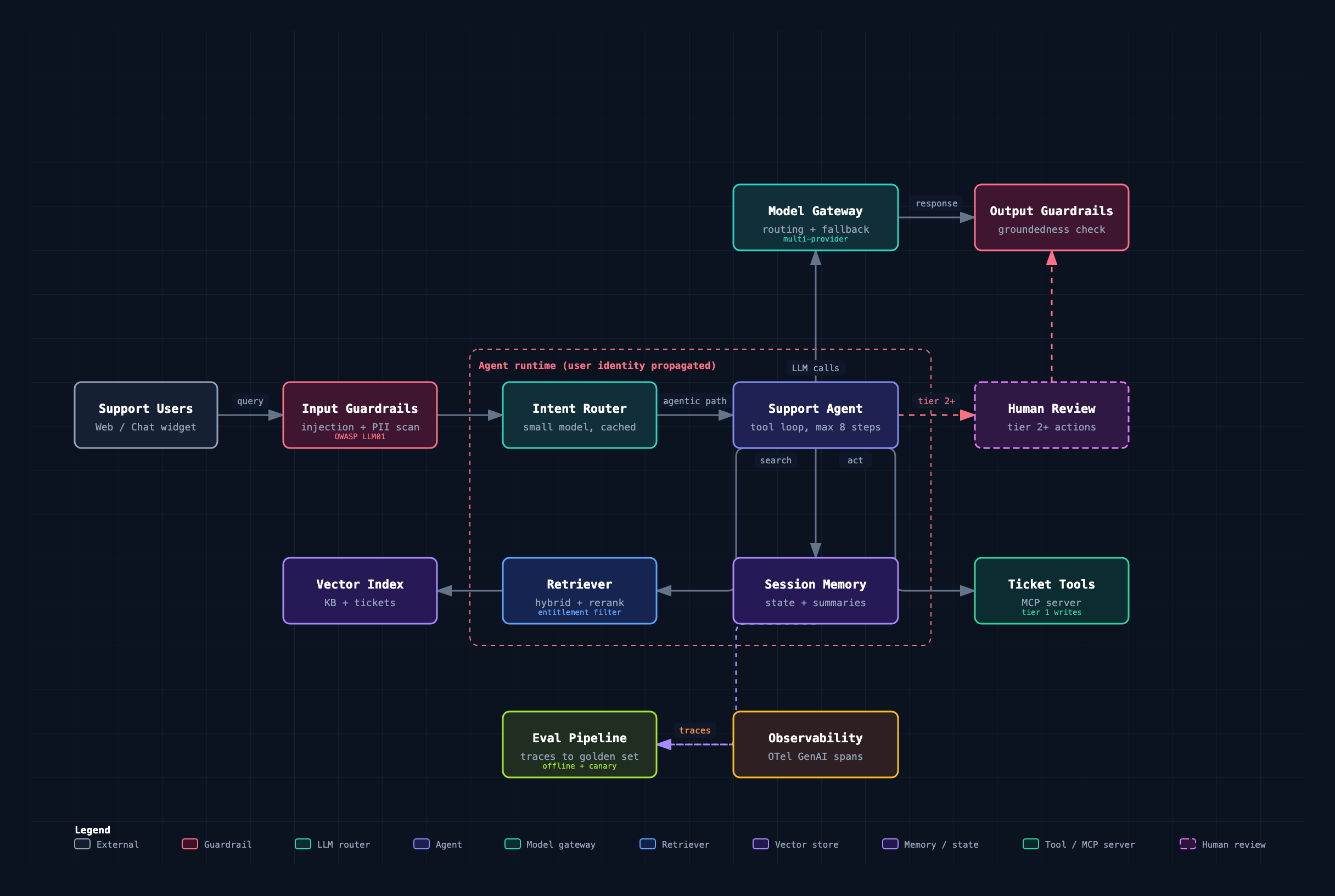
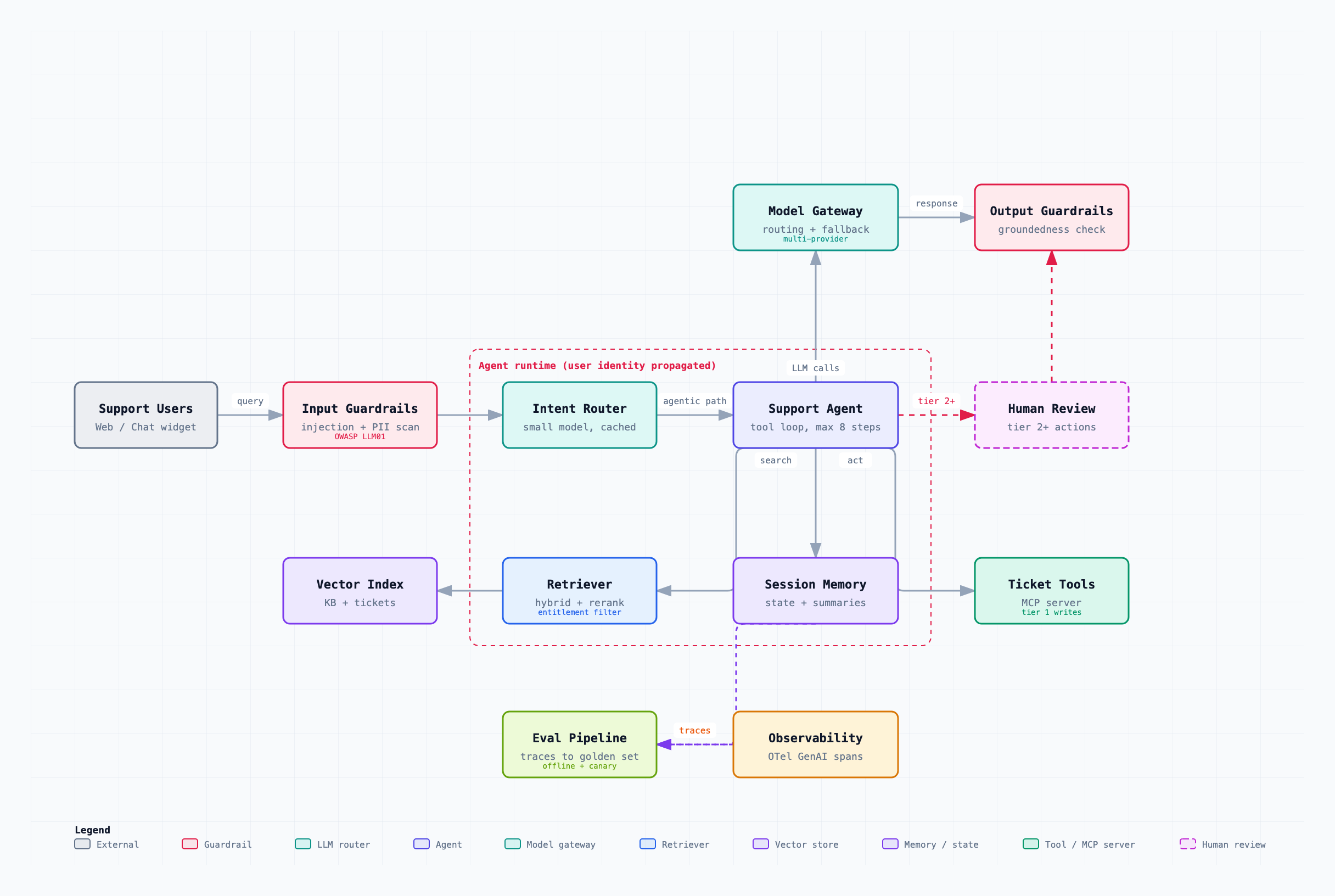
A generated architecture, drawn with agent-native components. One figure from the support agent design.
Agentify is an agent skill that works like a seasoned AI solutions architect. Describe what you want to build, answer a few questions, and get a detailed, defensible system design document with embedded diagrams, where every decision cites an authoritative source.
npx skills add avnath13/agentify -g
Every design embeds diagrams drawn by the bundled engine, with a component vocabulary built for agentic systems.
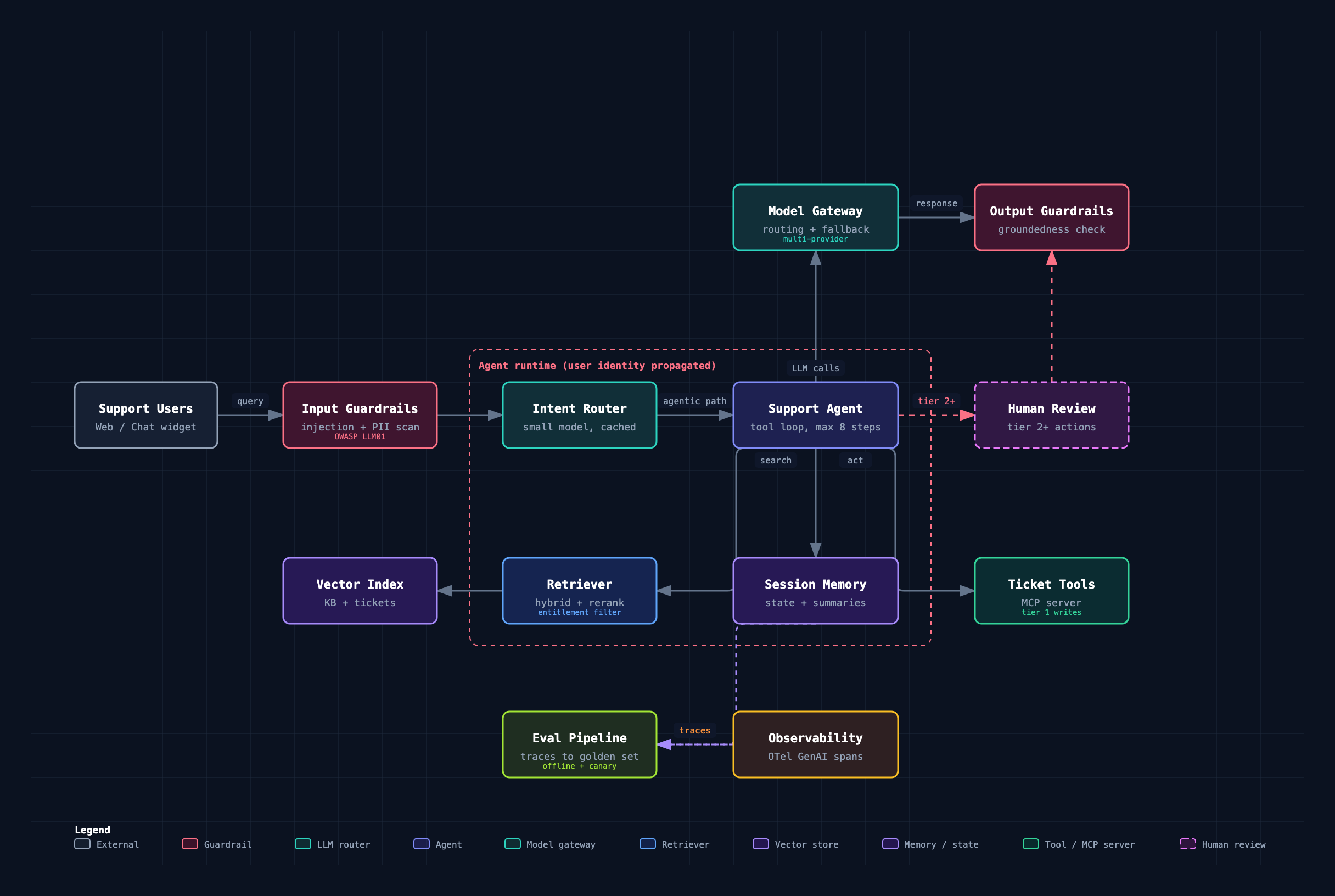
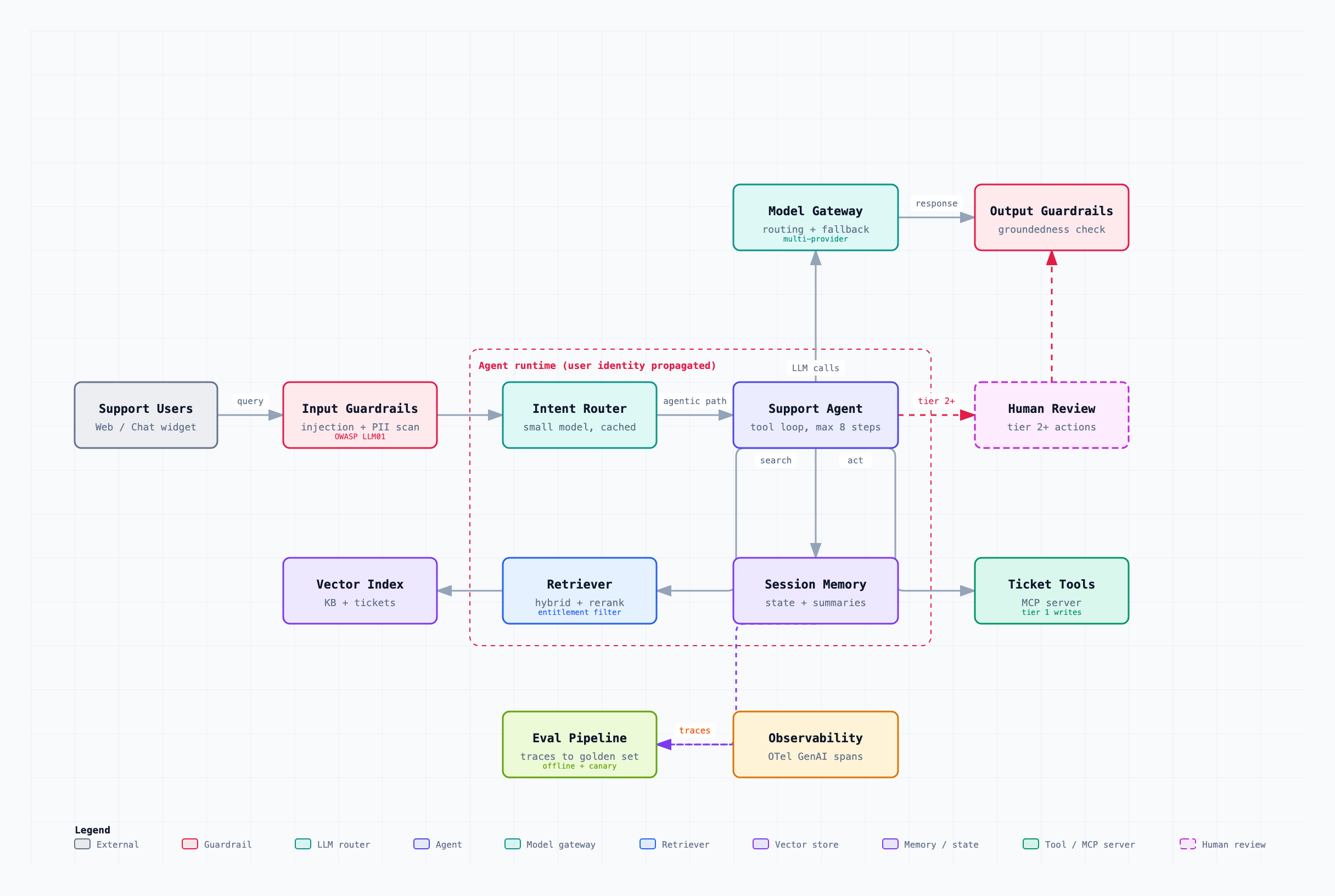
Components, trust boundaries, and how requests flow between them.
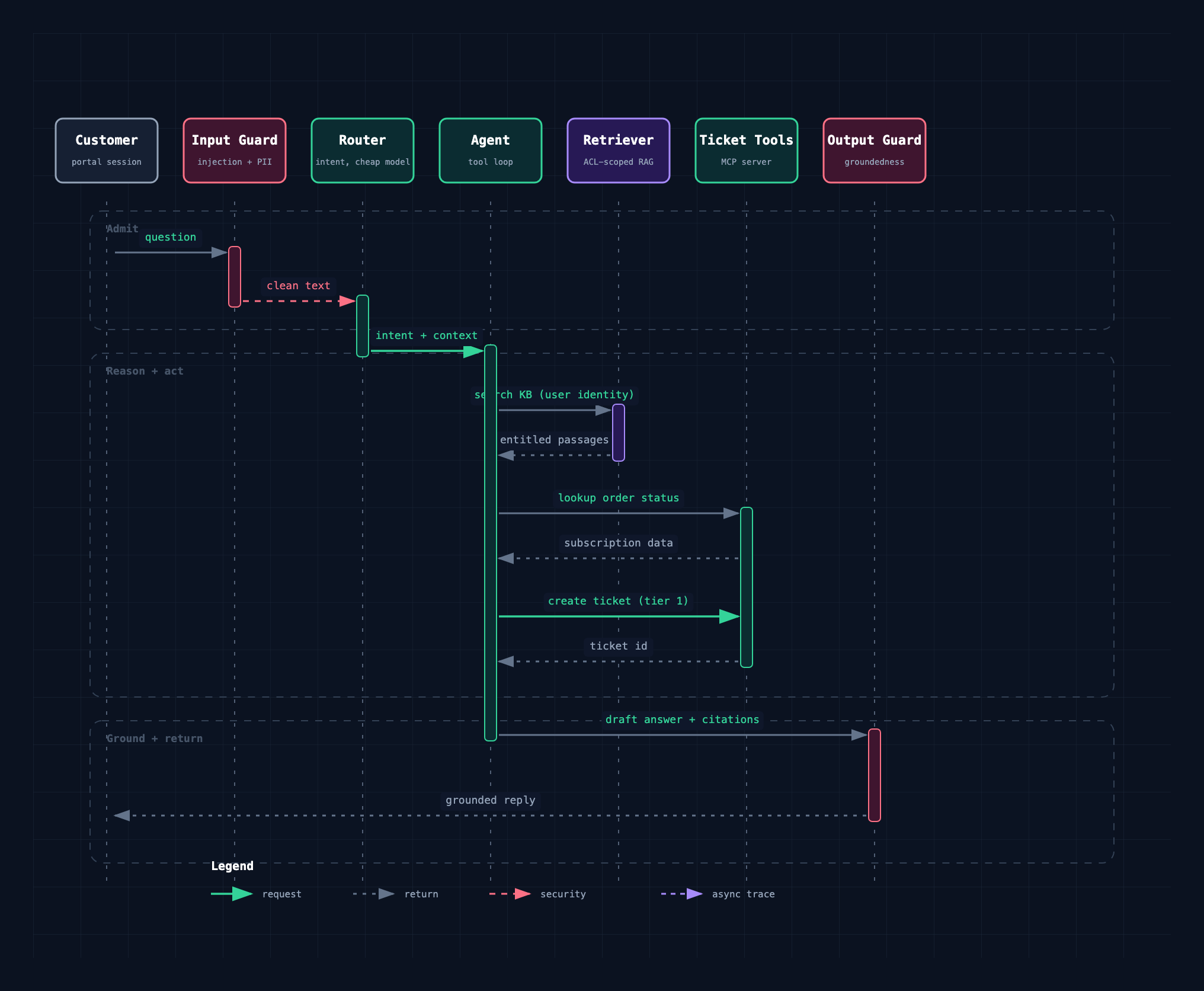
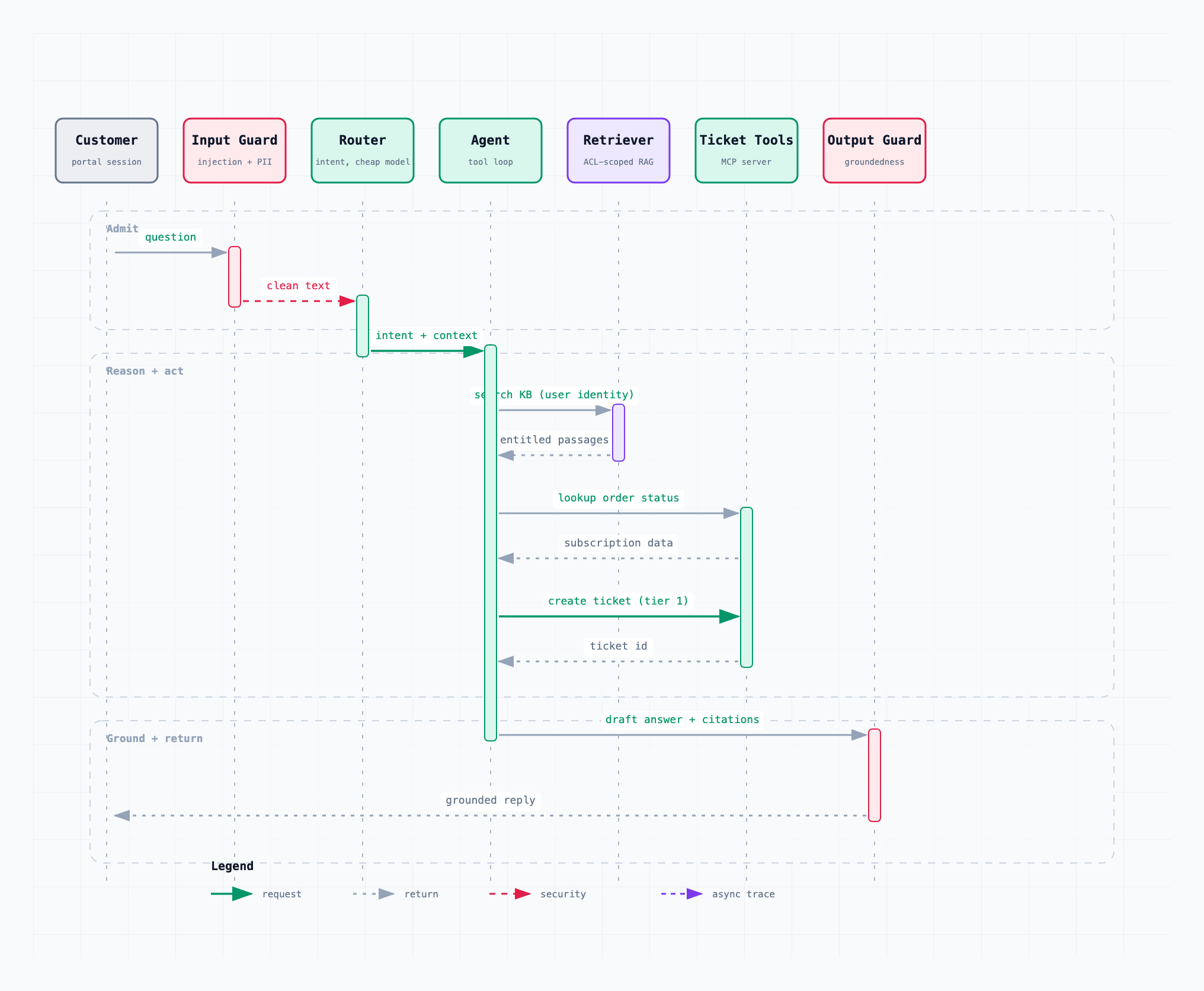
The primary request path, including guardrail and retrieval hops.
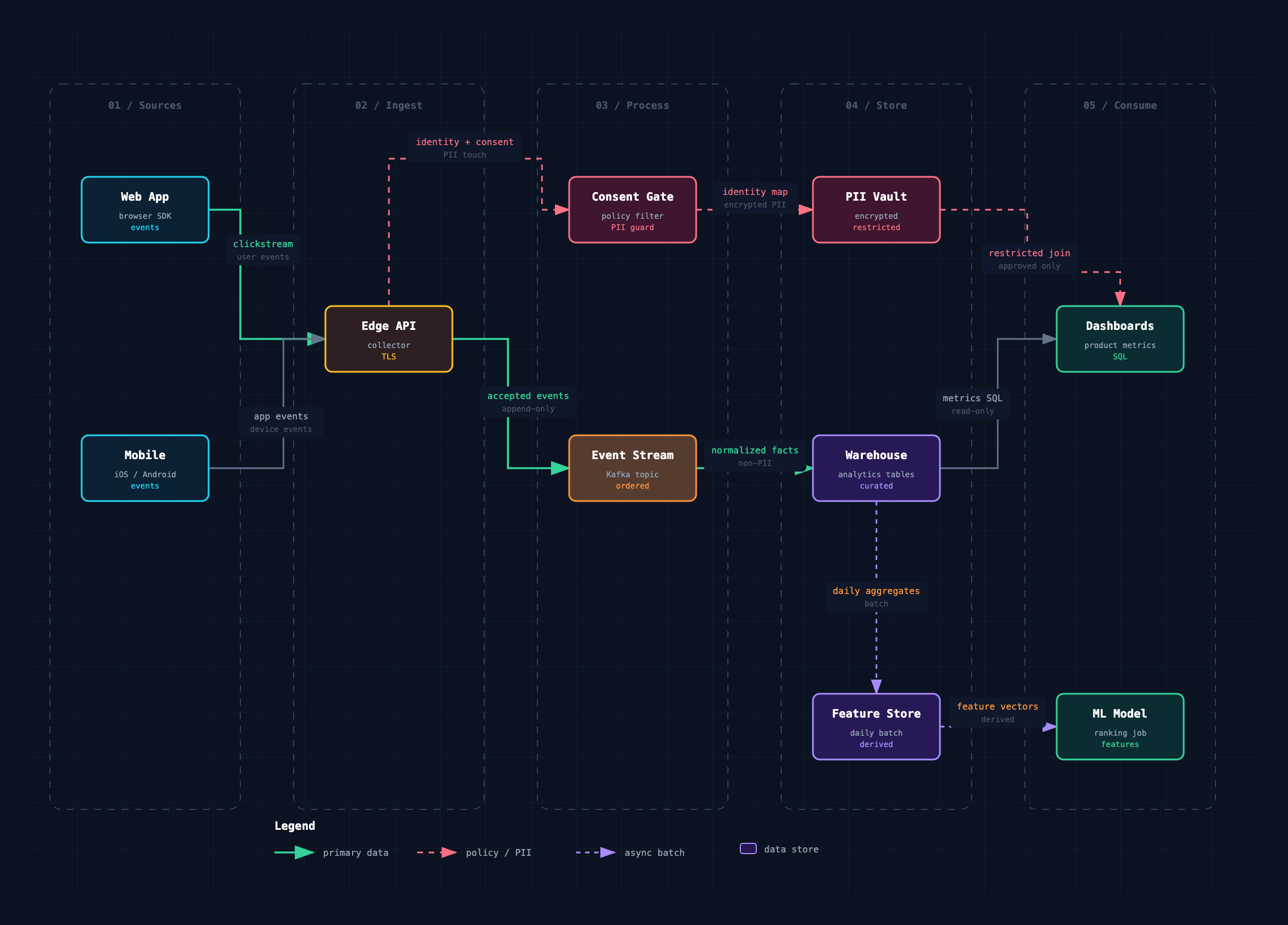
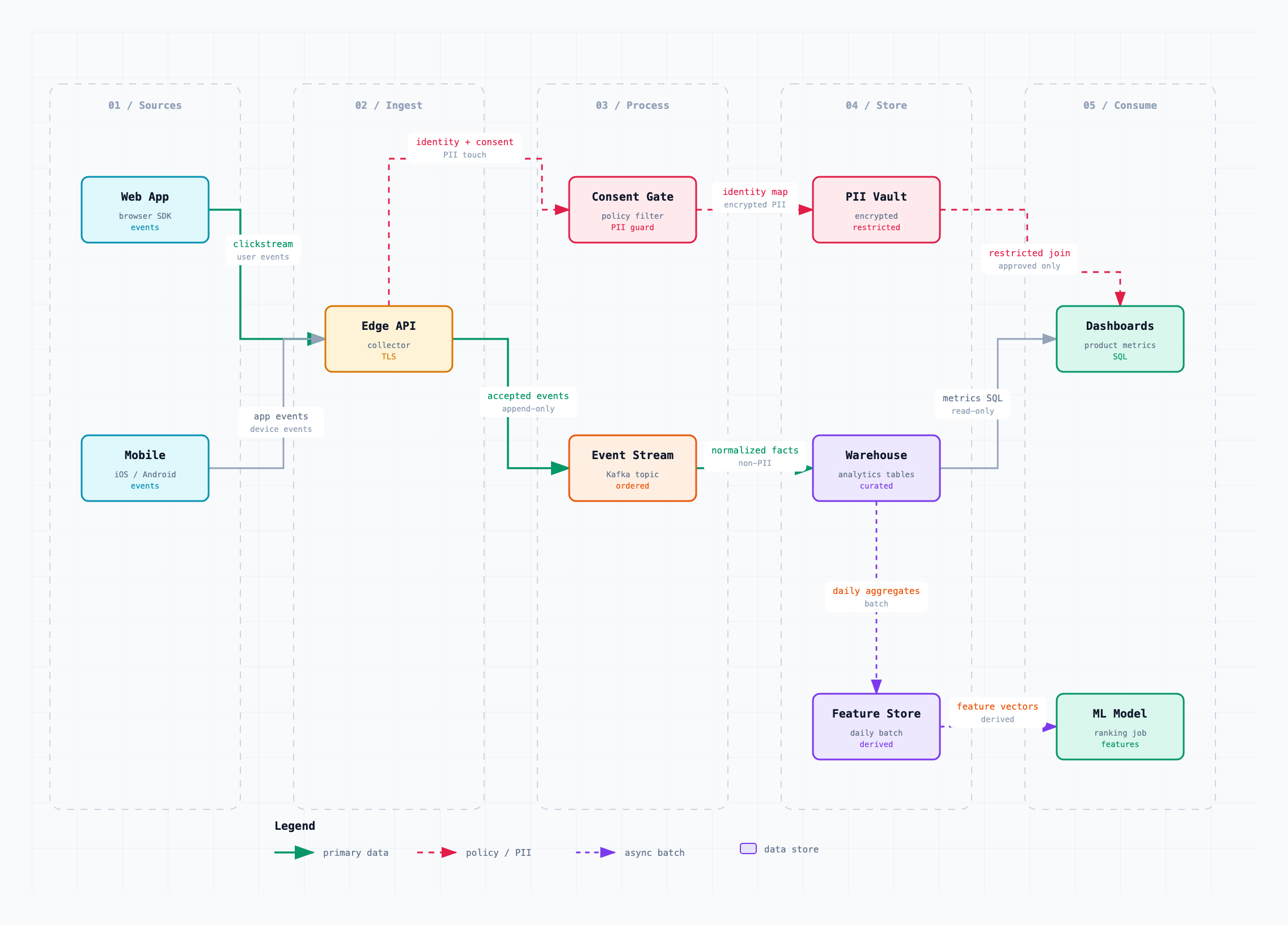
Ingestion and retrieval pipelines, PII boundaries, and freshness.
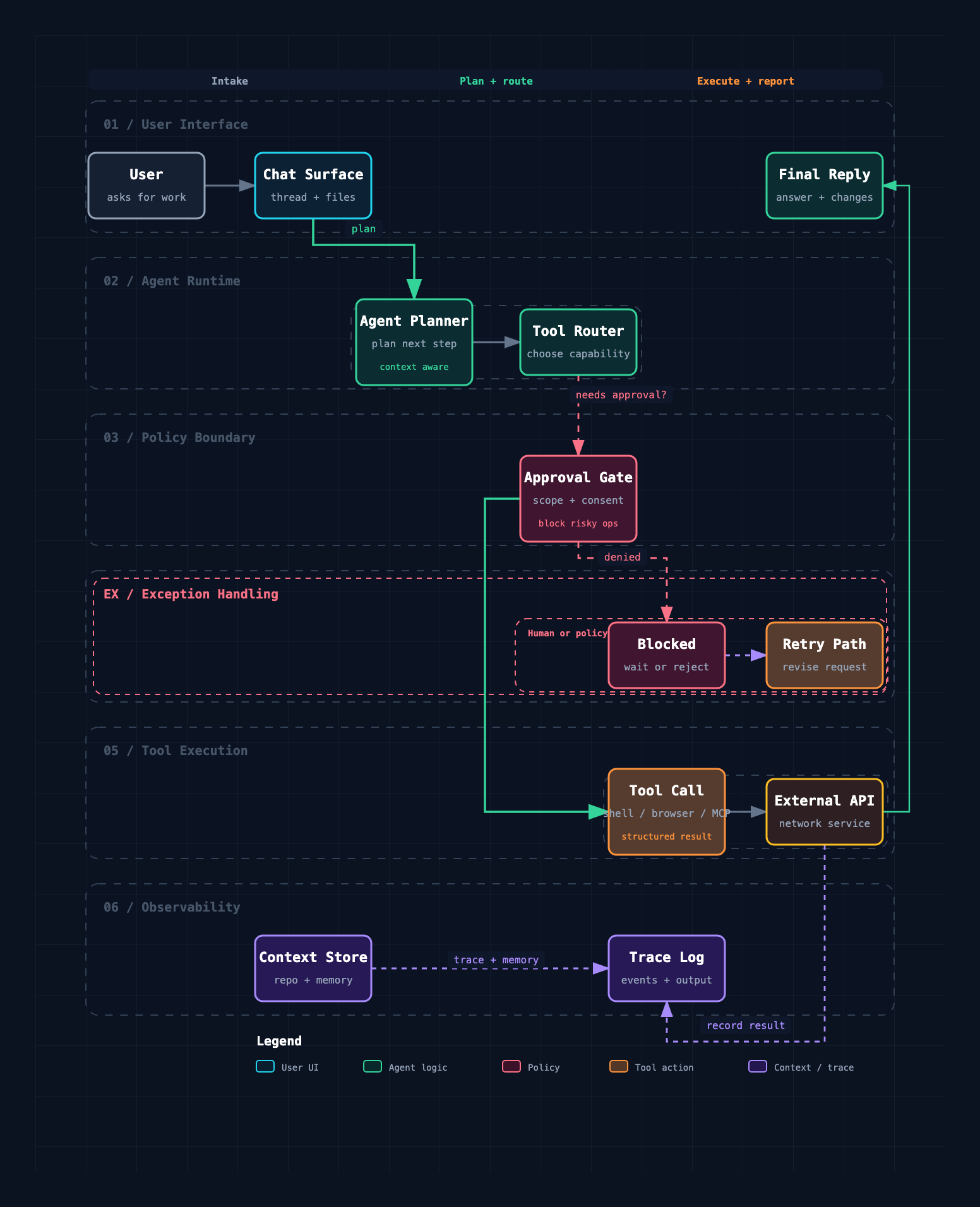
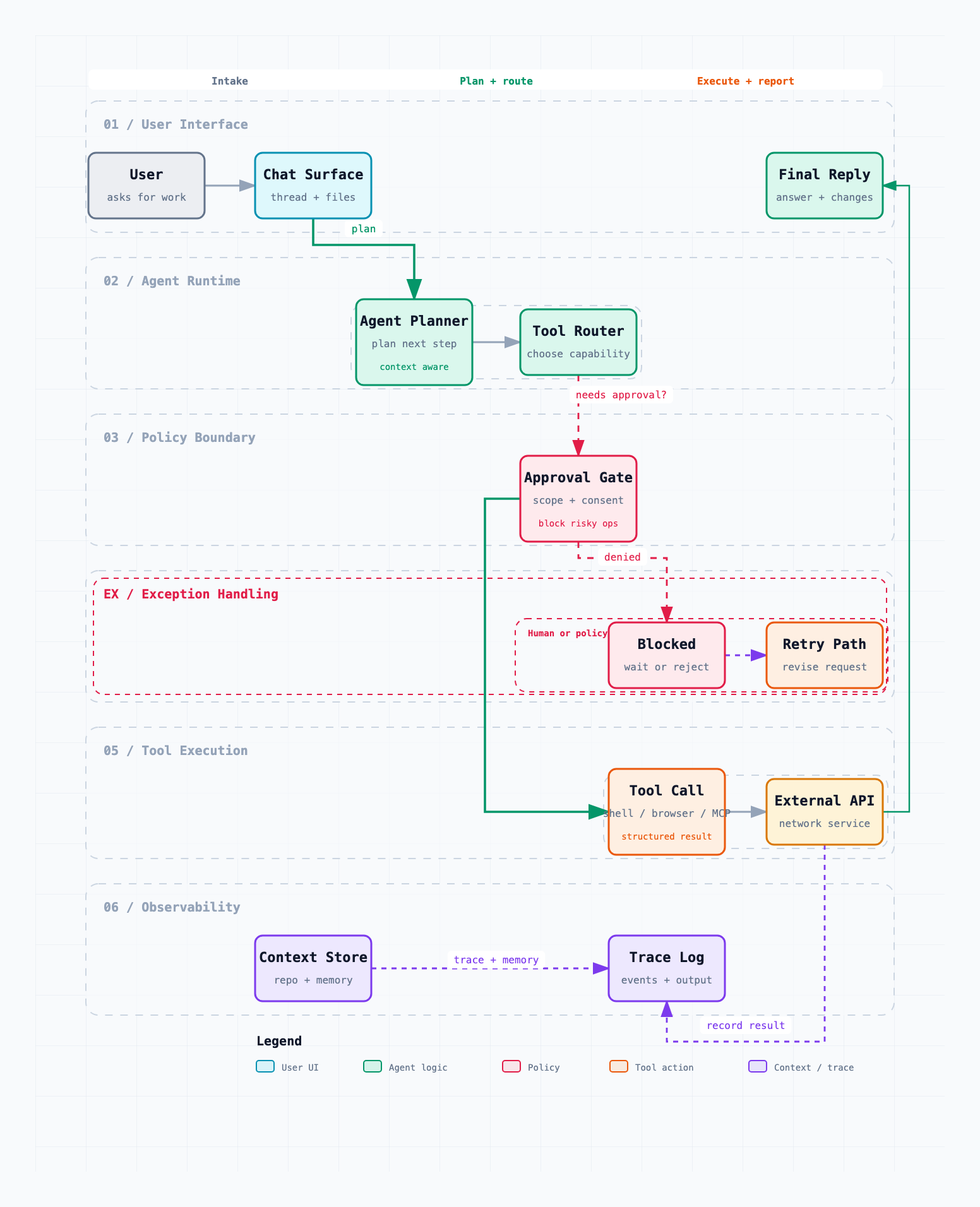
The orchestration pattern: routing, chaining, and lanes.
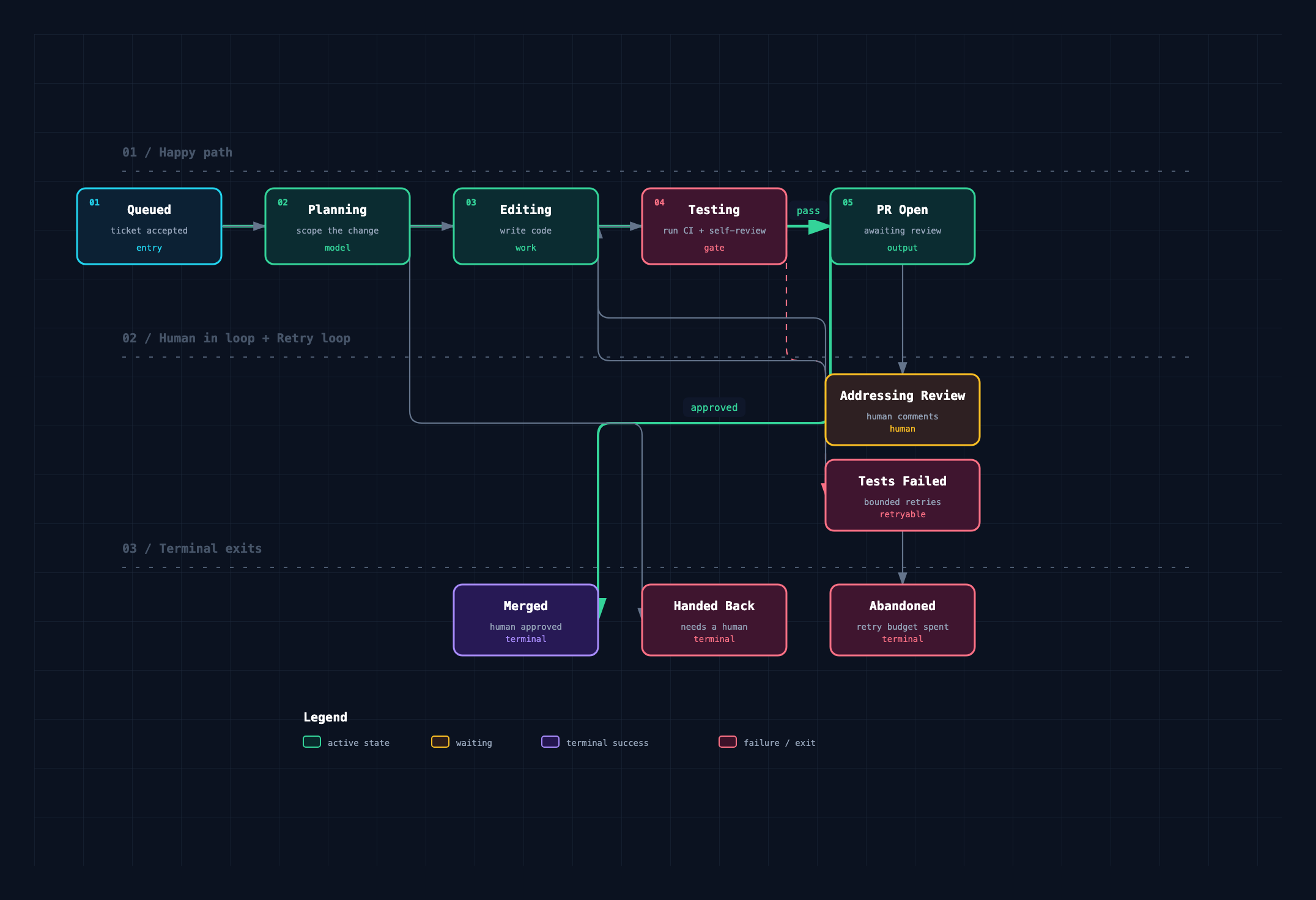
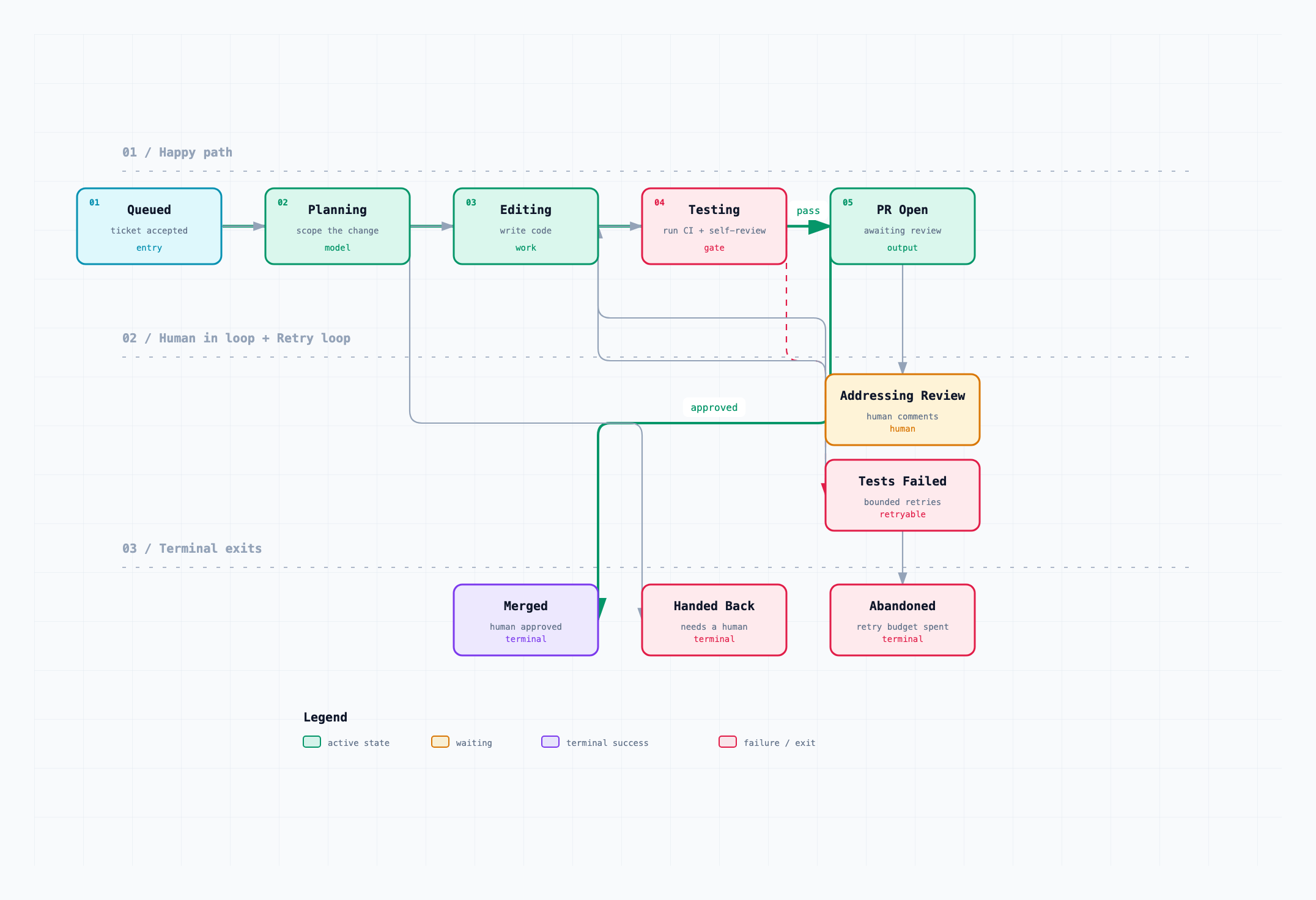
State machines: an agent run, a ticket, an order, with retries and exits.
Agent-native components: agent, router, retriever, vector store, guardrail, eval loop, human review, tool, memory, queue, ASR, TTS.
Asking an LLM to "design an agentic system" produces plausible but ungrounded output. Agentify forces the design through the published engineering canon.
Forces the design up from deterministic code, to a single LLM call, to workflows, to an agent, to multi-agent, with a written justification for every climb and an anti-escalation rule for when a simpler rung wins.
Do you need generative AI at all, RAG vs fine-tuning vs long context, single vs multi-agent, autonomy tiers with enforcement gates, and memory tiers.
Asks what happens if the system is wrong or abused, and scales the guardrails to that harm, not to company size.
Classifies a design lightweight or enterprise and sizes the document to match, so a small feature is not buried in tenant-isolation and DR ceremony.
Vendor agent guides, model and platform primitives, cloud well-architected frameworks, peer-reviewed surveys, OWASP, NIST, MCP, OpenTelemetry, agent benchmarks, and voice and multimodal design, spot-checked against primary sources.
One HTML file with a theme toggle, a table of contents, print-to-PDF, and embedded interactive diagrams. No dependencies, no network calls.
A conversation, then a document.
It asks only the questions whose answers would change the design: data and permissions, autonomy, load, latency, cost, compliance, and what harm a wrong answer causes.
It walks the decision trees, recording the answer, the reasoning, and the citation at every gate, including the alternatives it rejected.
It writes the document section by section against an enterprise bar, doing the capacity and cost math with live-sourced pricing.
It renders the diagrams, assembles a self-contained HTML document, and runs a final gate checklist that rejects any unjustified or uncited claim.
Complete documents produced by the skill. Open any in a browser; each is fully self-contained.
A single tool-using agent behind an intent router, permission-aware RAG, autonomy tiers with human escalation, and the full cost and latency math.
Open design → Production · not an agentDeliberately not an agent: a routed retrieval workflow where daily-changing ethical walls make permission-aware retrieval the crux. The anti-escalation rule on the record.
Open design → Interview modeA bounded agent per ticket with a reflection loop, sandboxed with no merge access, and an explicit single vs multi-agent economics argument, with per-section coaching.
Open design → LightweightRight-sizing at work: it lands at Rung 1 (a single extraction call over deterministic matching, no agent, no vector RAG) and stays short, while treating allergens as full-depth safety.
Open design → VoiceA cascaded voice design with the conversational latency budget, turn-taking (VAD, endpointing, barge-in), and audio-native evaluation, drawn with the speech component types.
Open design → agentify diffThe recipe assistant with health guidance added and 800k users. A visual diff shows what the change did: the weight class jumps to enterprise while the rung stays the same, and the skill refuses to give individualized medical advice.
Open comparison →Install the skill, then describe what you want to design.
Add it to Claude Code, Codex, Cursor, and more:
npx skills add avnath13/agentify -g
In your own words, for example:
"Design an AI agent that triages our inbound sales leads: reads the inquiry, enriches from our CRM, scores it, and drafts a reply for a rep to approve. About 300 leads a day."
Agentify asks only what would change the design, walks its decision trees, and writes a self-contained <use-case>.design.html. Prepping for a system design interview instead? Just say "interview mode".